

2026 OBAP Conference Brings Black Aerospace Professionals to Chicago, Where It All Began

Bonnie DeShong
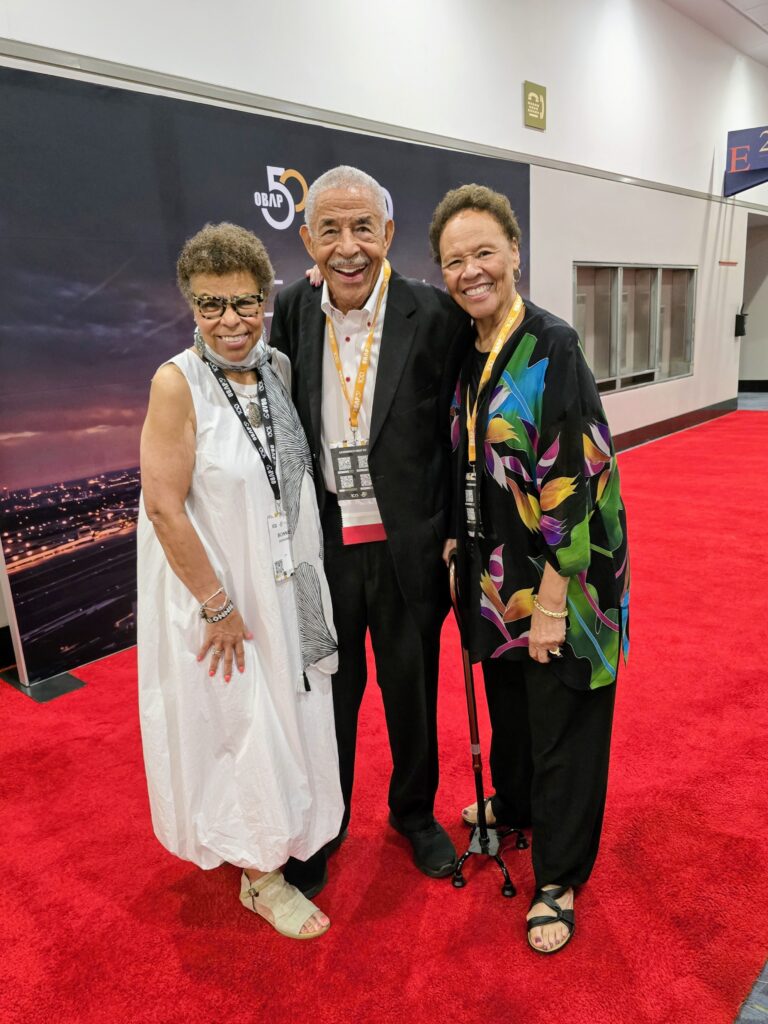
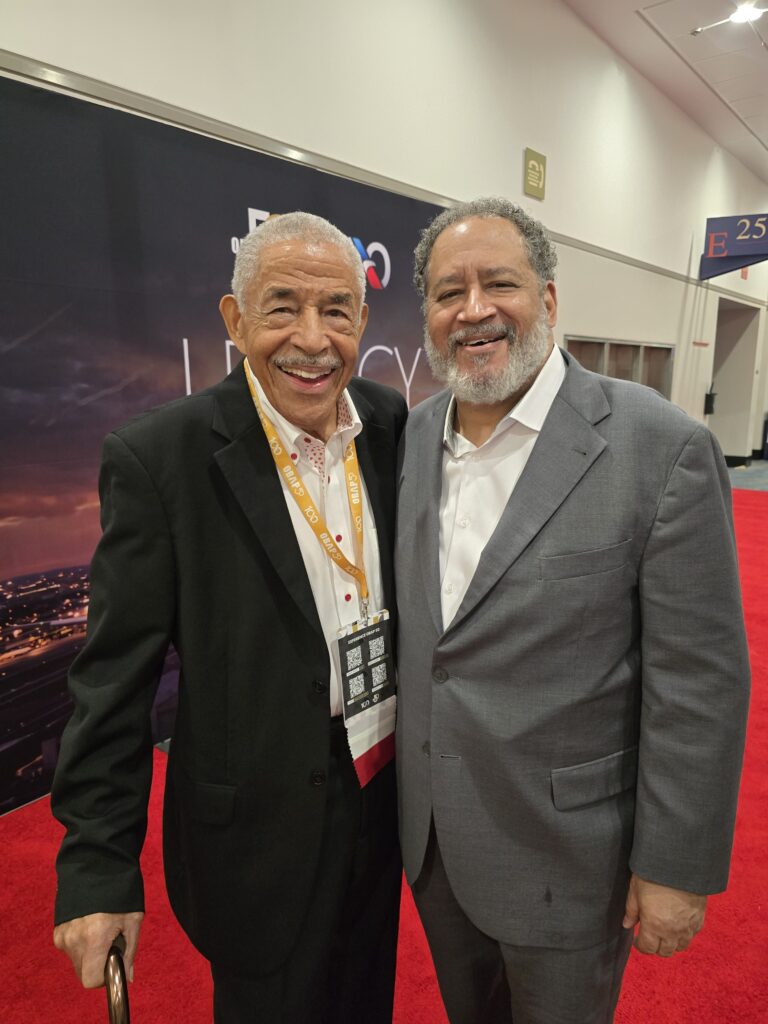
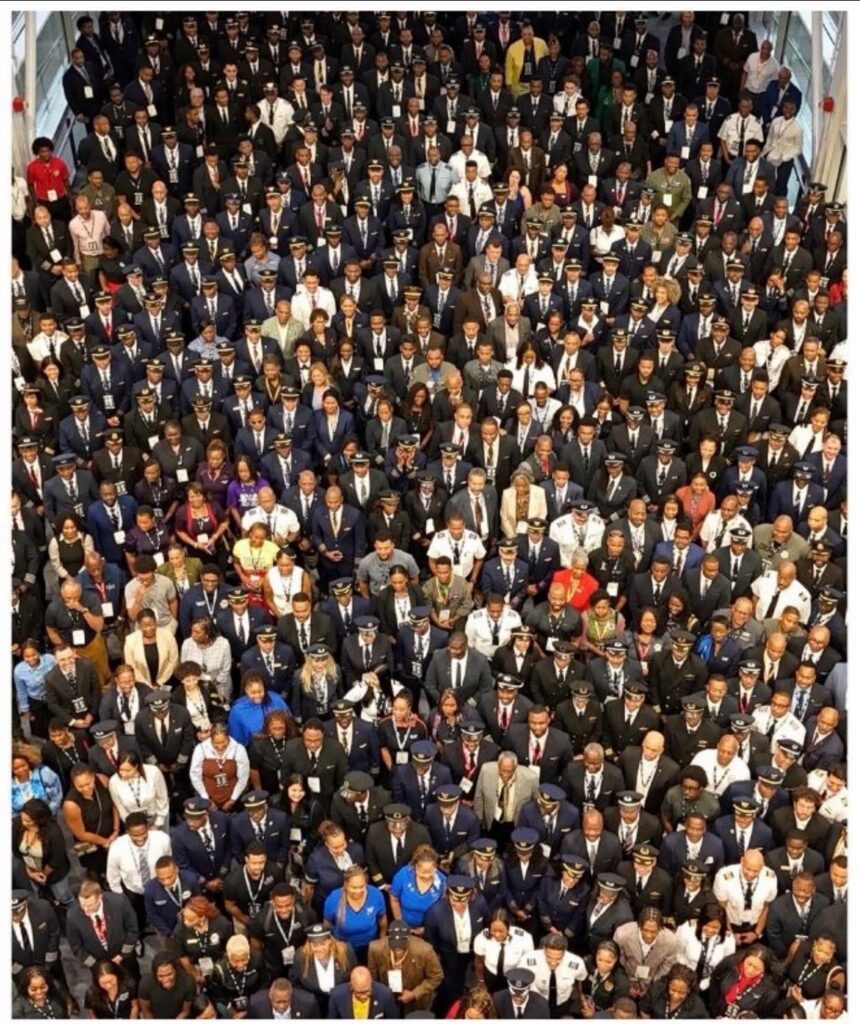
August 12th through the 14th, over three thousand Black Aerospace professionals came to Chicago to celebrate OBAP’s 50th anniversary. I was so honored to be invited by one of the founding members of the organization, Captain William Norwood, who is also my uncle in love, to attend this year’s conference. It was an amazing and eye-opening experience I will never forget. I learned that only around 4% of pilots are Black. The increase has a great deal to do with OBAP. Here’s a little history of the organization, portions taken from the OBAP website.
The very first Black American pilot was David Harris, hired by American Airlines in 1964. Then there was Marlon Green. He was turned down by Continental Airlines on account of his race in 1963, litigated all the way up to the Supreme Court, and won. (Colorado Anti-Discrimination Commission v. Continental Airlines, Inc. 372 U.S. 714 no. 146). He joined Continental in 1965 and became a captain in 1966. Continental and United merged in 2012.
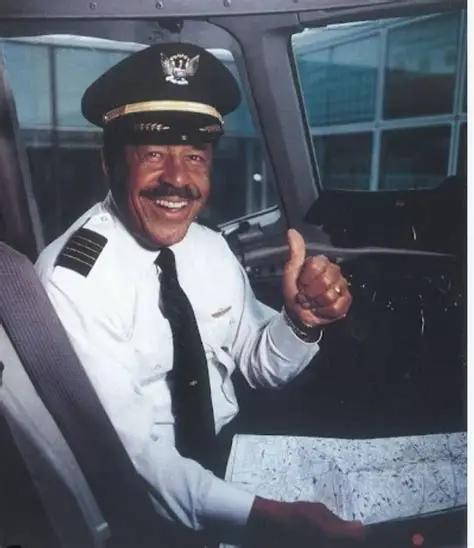
Captain William Norwood was hired by United Airlines in 1965. United’s first black pilot, Capt. Norwood’s legacy and 31-year United career are honored by a B727 adorned with his name hanging in Chicago’s Museum of Science and Industry.
In 1976, Ben Thomas, a young African American pilot with Eastern Airlines, spearheaded an effort to form a permanent body to address discrimination in the airline industry. He invited thirty-seven African American pilots, representing nearly 50% of the industry total at the time, to convene at the O’Hare Hilton Hotel in Chicago on September 17 and 18.
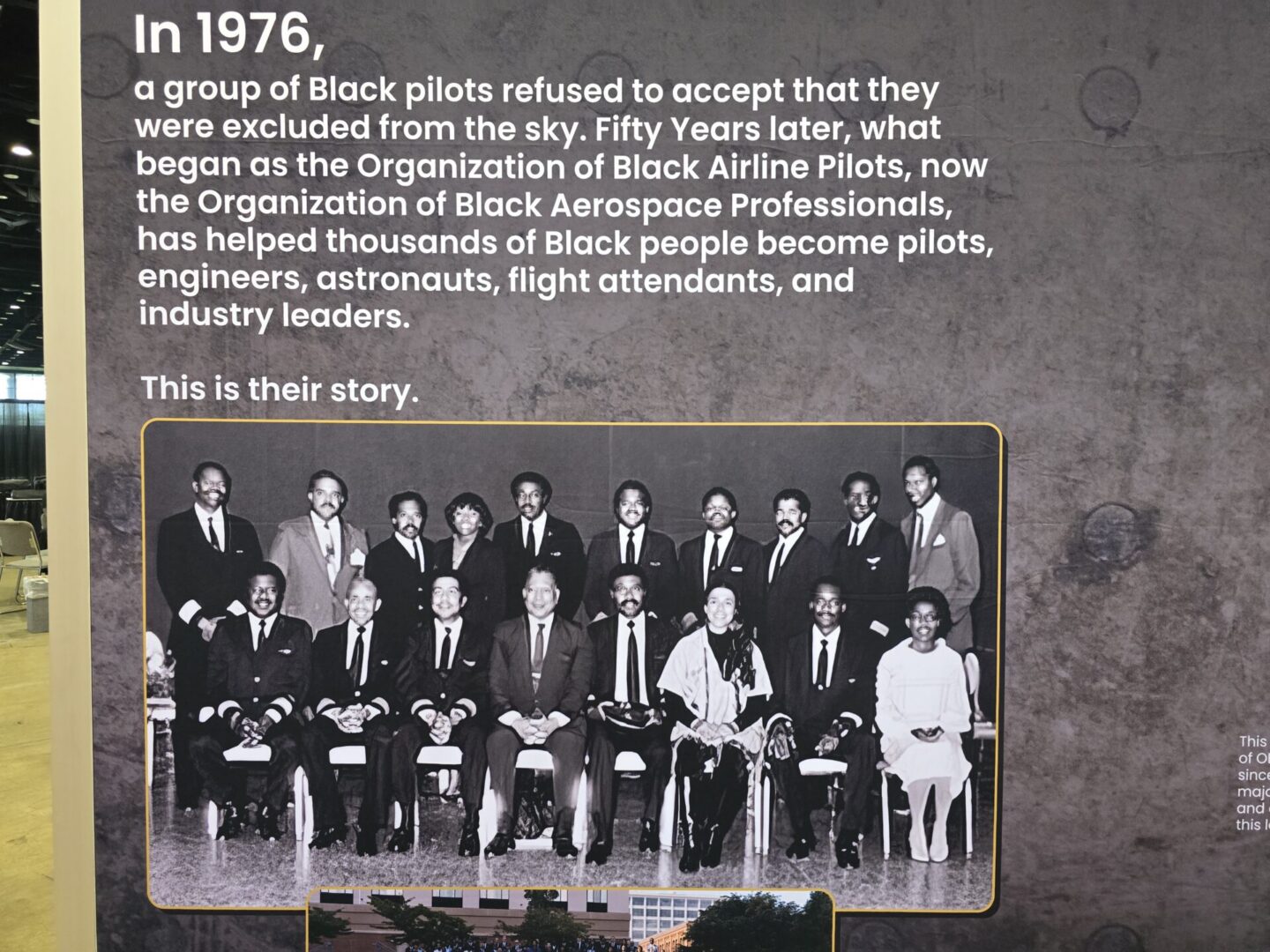
The original members were according to OBAP’s official records, the founders are Stanley M. Allen, Don E. Barton, Howard L. Baugh, James E. Betts, Charles E. Black, Frederick I. Boone Jr., James A. Brannen, William Brown, Willis N. Brown Jr., Solomon Cates, Sidney L. Clark Jr., Bennie Clay, Charles A. Davis, James L. Edwards, Simon P. Gaskill, John Gordon, James H. Green, David E. Harris, Harold C. Heard Jr., Frank B. Jones, Alexander Lambert, James E. Lee III, Charles S. Mack, Edward Moon, Joseph Moore, Pickney Mosely Jr., George W. Nixon, Jack Noel, William R. Norwood, Oscar Perry, William C. Rand, Richard E. Roundtree, Herman O. Samuels, Robert E. Smith, Georges “Paco” Sulmers, Barry Taylor, Benjamin F. Thomas, and Ricardo Youngblood.
These 38 individuals, representing nearly 50% of the worldwide minority-pilot population at the time, met in Chicago to address the lack of diversity in the airline industry. They formed OBAP (The Organization of Black Airline Pilots) to advocate for equal opportunities, support Black pilots, and mentor the next generation of aviation professionals. The name was changed to the Organization of Black Aerospace Professionals to include all aspects of the Aerospace field.
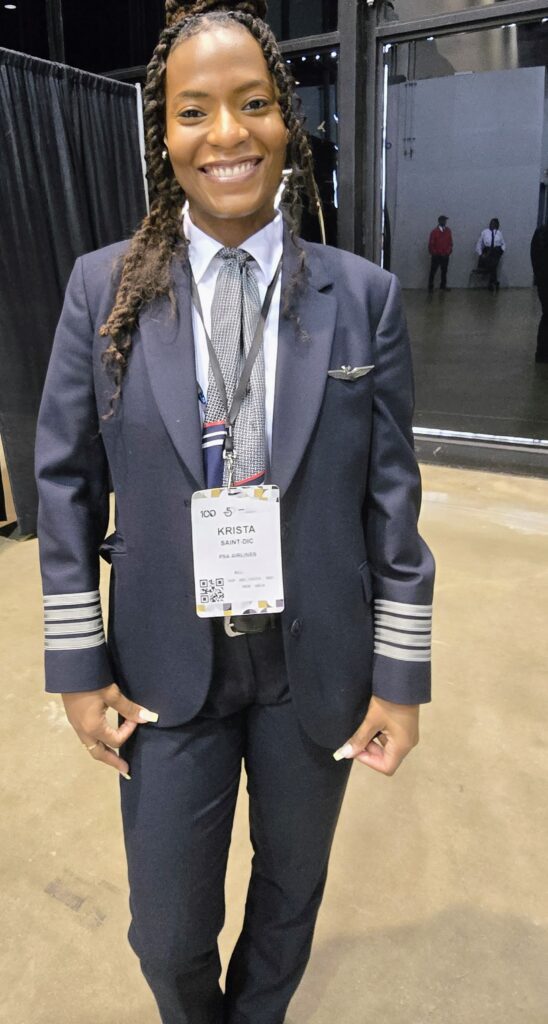
While at the conference, I was shocked at how young the pilots were. I was able to speak to a few and found it interesting that both male and female pilots, whether they grew up in the United States or another country, had their desire to fly begin as young as 5 years of age. I spoke with Captain Krista Saint-Dic, who flies for PSA Airlines, and she told me that as a child growing up in Haiti, she loved watching planes fly overhead every day but didn’t dream of being a pilot because it wasn’t something she was exposed to. It was on her first flight from Port-au-Prince to Miami that she felt her dream would manifest as a flight attendant. After being on that job for a few months, she saw women pilots and thought, “If they can do it, so can I.” She went to flight school, and the rest is history.
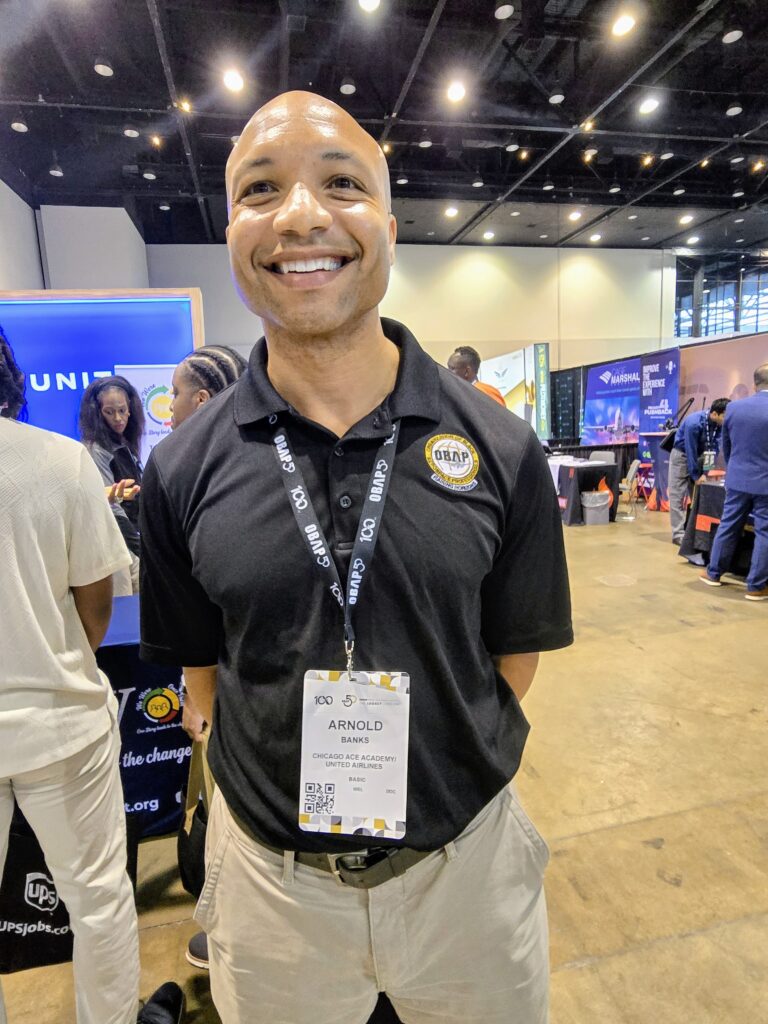
Captain Arnold Banks is a 737 captain based in Guam and has been with United Airlines for 20 years. He told me that it was 20 years ago at an OBAP conference he was hired by Continental Airlines, which of course then merged with United Airlines. He was also the first recipient of the Captain William Norwood – Norwood Foundation’s scholarship. When I asked Captain Banks what that honor meant to him, he replied, “Well, it meant a lot, just given the history and legacy, and to be awarded a scholarship in the name of someone who has played such a momentous or such a huge role for black pilots in aviation. And also, just for Mr. Norwood, he has been a great mentor, not only to me, but probably hundreds, if not thousands, of up-and-coming pilots.
I found this message with everyone I met regarding OBAP’s mission of mentoring and helping people who want to go into the aviation field. They want to make sure the ones coming after them are prepared to be the best.
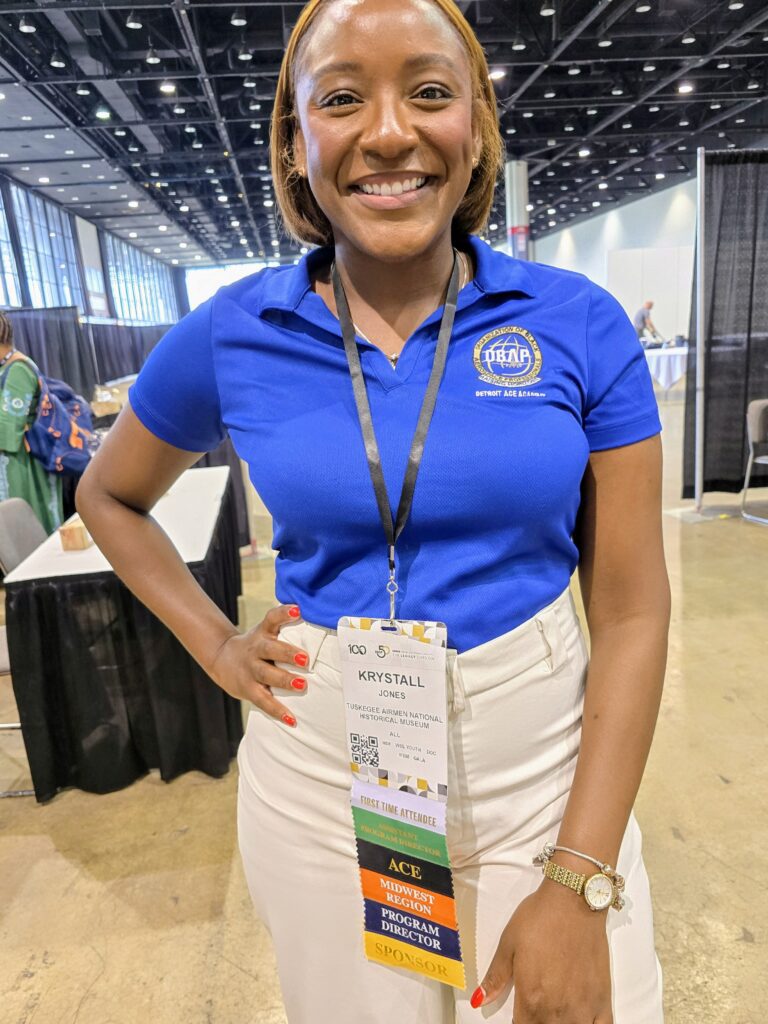
Krystall Jones is with the Tuskegee Airmen National Historical Museum and runs the Flight Academy. Located in Detroit, Michigan, the museum and flight academy teach young people from the ages of five and up all things aviation. They are introduced to aviation through STEM education. And then once they come of age, they are put on the track of their choice, whether they want to go into aircraft mechanics, into air traffic control, or as private pilots, drones, or aviation management; anything that they have the desire to go into, they put them on the track to do that.
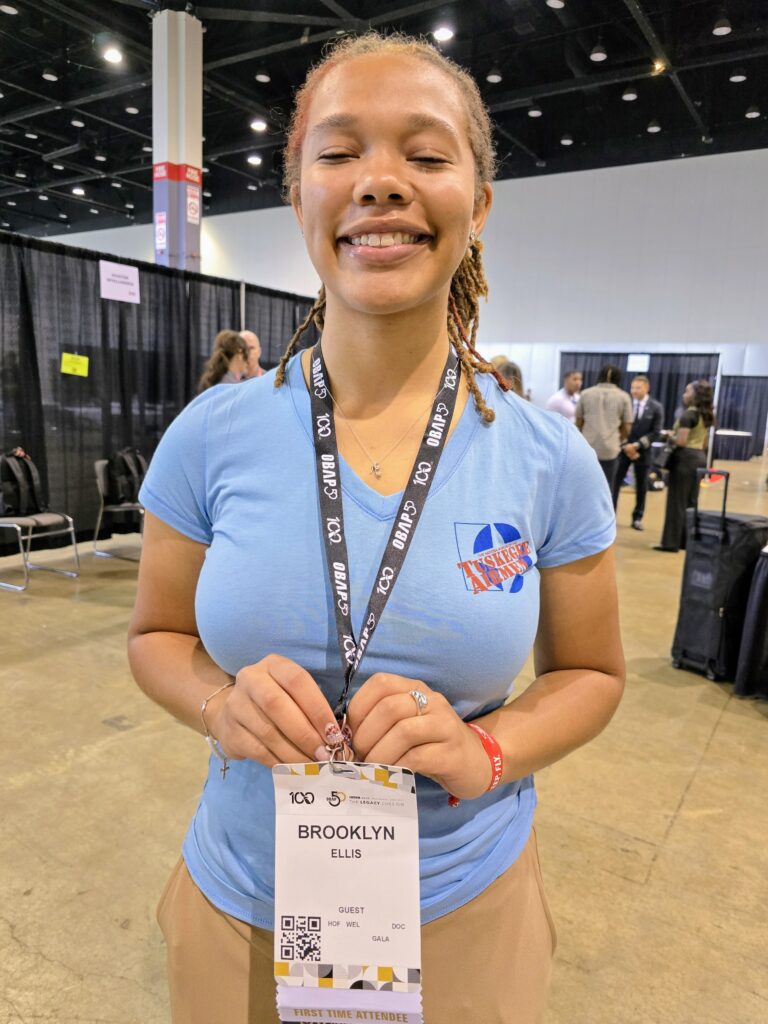
One of those students from the program is Brooklyn Ellis. One week before the OBAP conference, at the age of 19, she received her pilot’s license. I asked her, being from Detroit, where her interest in flying came from. She explained to me that she always liked planes and taking trips on them. She never thought of being a pilot until she actually saw a black pilot and thought to herself, “Wait, this is a career I could do.” Eventually, someone told her about the Tuskegee Museum and flight school on the east side of Detroit where she could get her pilot’s license. She started in the ACE academy at the age of 16. When asked what she would say to inspire the youth of color from Chicago, Detroit, or anywhere to pursue an aviation career, she told me, “Being a pilot is definitely hard, especially in an industry where there aren’t a lot of people that look like you, especially me being a woman as well. It could be a little- what’s the word? It might be a little scary, but just stick through it. Make sure you look for mentors. Have people around you that can support you and help you get through because it’s going to get hard sometimes. So just stick with it.”
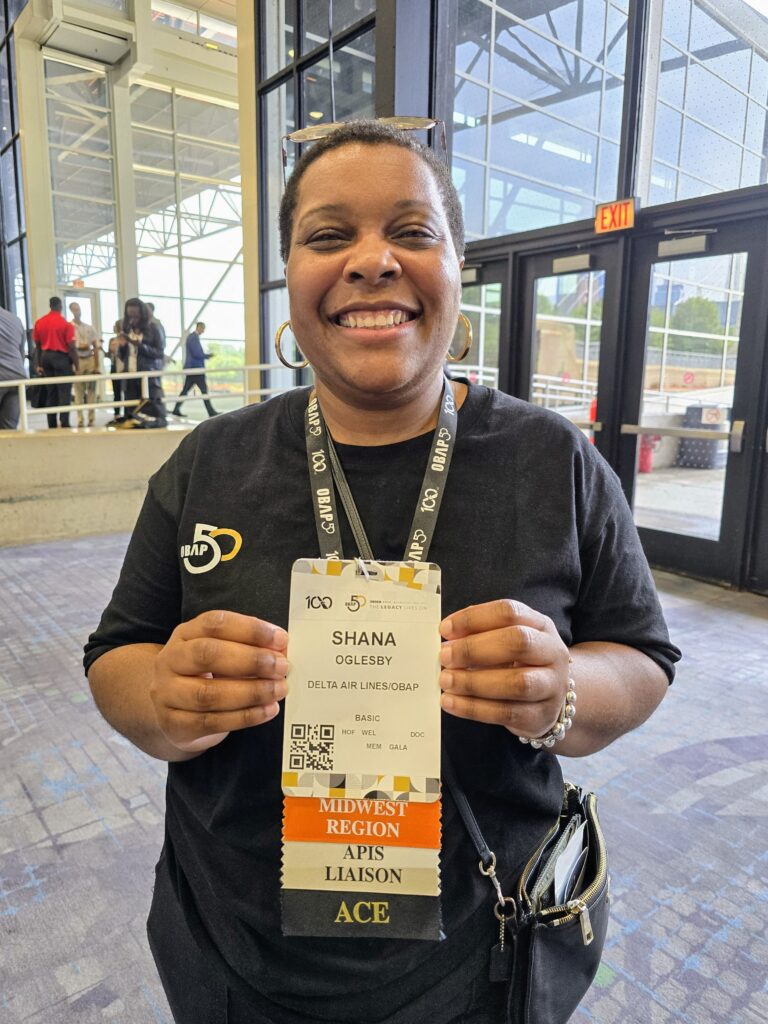
Once OBAP went from Organization of Black Airline Pilots to Organization of Black Aerospace Professionals, it opened the doors to include flight attendants, engineers, air traffic controllers, and more. Shana Oglesby was my guide through the conference, setting up interviews for me. She is a flight attendant for Delta Airlines and has worked with OBAP for a few years. Shana explained to me the importance of OBAP to the aerospace community. “OBAP is becoming, instead of it being the Black Pilots Association, now we are the aerospace professionals. They started out trying to help others become pilots, but now they know how important it is to have people see themselves in any job in their career. Me, being a part of the aerospace professionals in schools- that’s what we do. We go out and talk to the students and tell them that anything you can think of, anything you can dream of, is in this industry. And so, for OBAP to change that, to allow all of those people, it’s amazing because you never knew before that there were other jobs if you had only seen the pilots or flight attendants walking in the airport with their nice, beautiful uniforms, and they look so good and sharp. But now you know that there are people behind the scenes.”
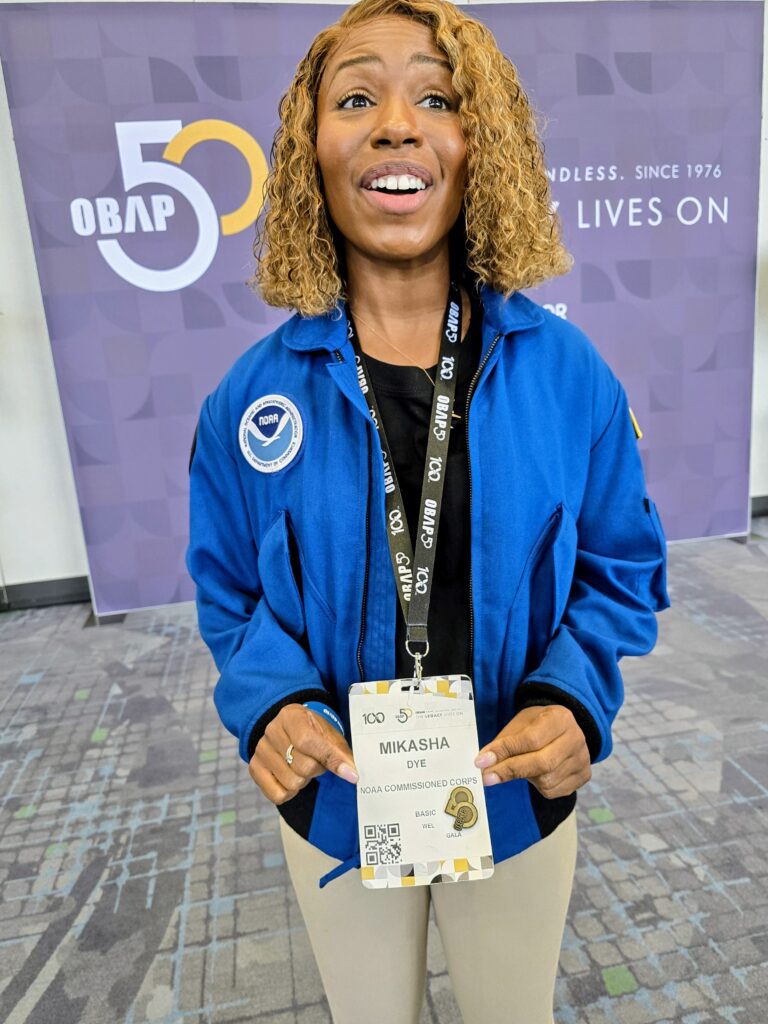
Throughout the conference, I met so many wonderful aerospace Black professionals. Mikasha Dye, who flies for NOAA (National Oceanic and Atmospheric Administration). She was the first Black female to go through their officer training program. She came from the civilian side with all of her ratings and licenses to be picked up by NOAA, complete officer training school, and then enter a pilot billet with NOAA.
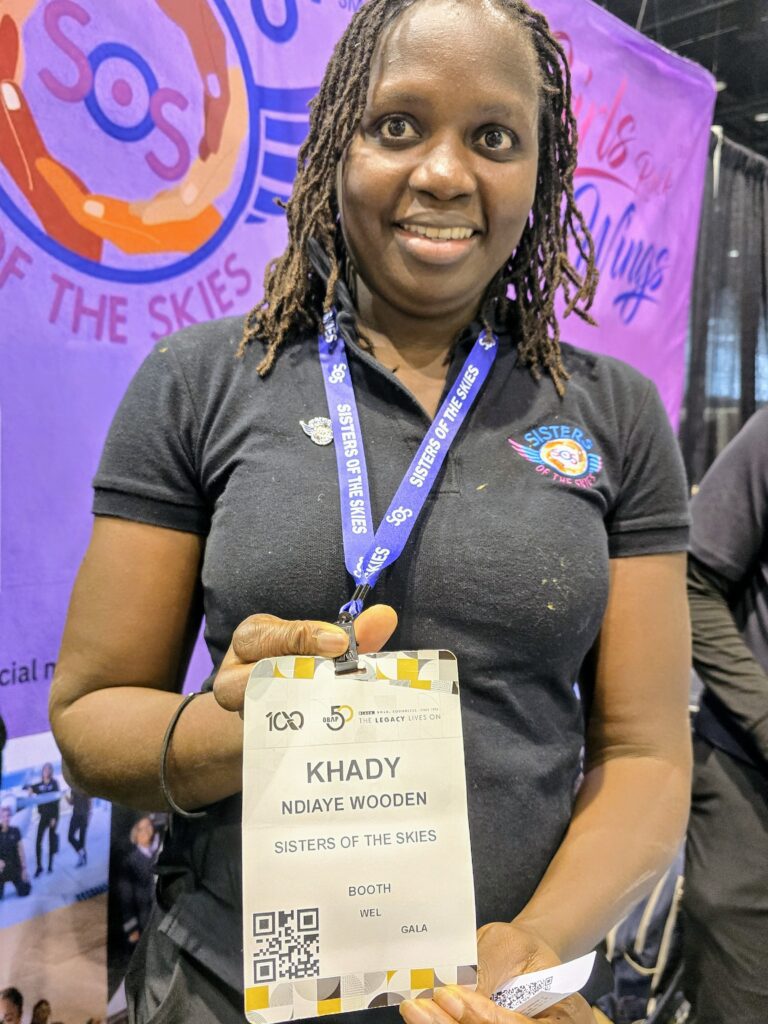
Khady Ndiaye Wooden with Sisters of the Skies explained that they are a black female pilot organization with the pillars of outreach, scholarship, and mentorship. They provide mentorship to young ladies who are coming up in the aviation industry and trying to become pilots. Their mission is to increase the number of black female pilots in the flight deck.
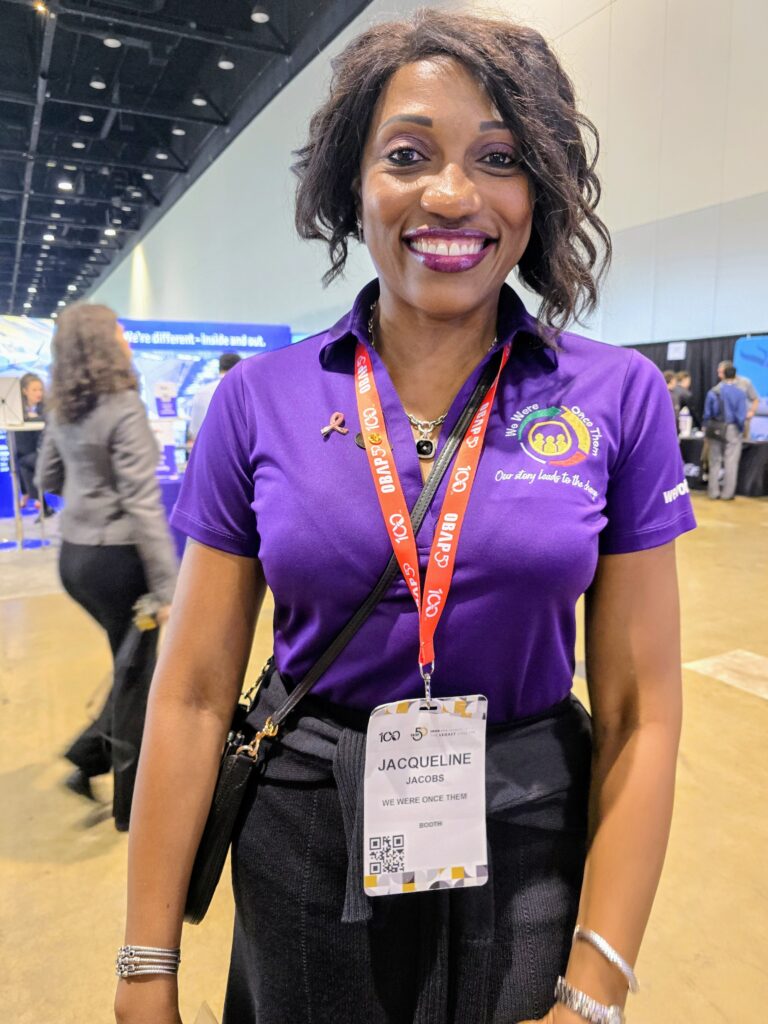
Jacqueline Jacobs is from We Were Once Them, an organization that was started by three pilots from Africa and that wanted to bring awareness of aviation as an organization without borders. Being from Jamaica, Jacqueline understands the need to go back and show the children and communities that she was once them. The organization goes back to the communities where they grew up as a testament to the children. We Were Once Them set up STEM programs in Africa and in the Caribbean. They go to one African nation a year and one Caribbean nation a year.
Michael Eric Dyson was a keynote speaker, and he had the attendees enraptured in his presentation.
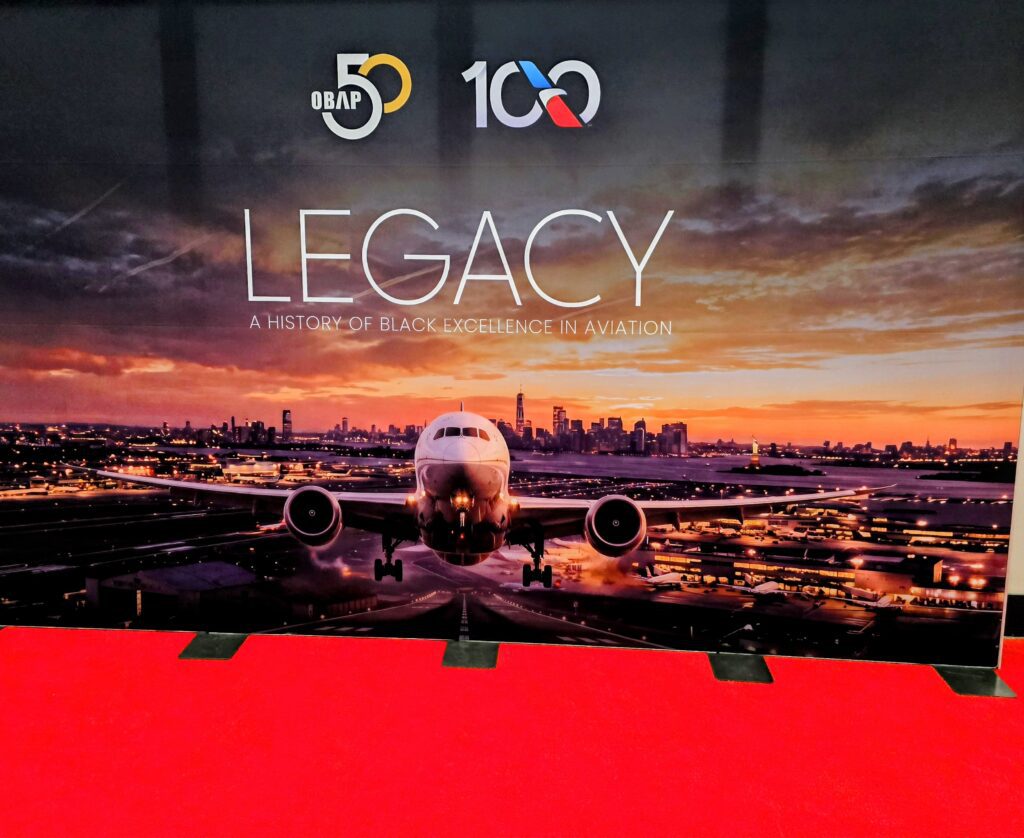
During the conference, the film LEGACY: A History of Black Excellence in Aviation was previewed. Director Jared Kudabeck did a wonderful job telling the story of the struggle and rewards of Black pilots and the History of OBAP. When it is released, I will give a more detailed review of the film and the process behind creating it.
.
As you can see, the experience and history of OBAP were life-changing for me. I can’t wait till next year.
Off they go into the wild blue yonder, flying high into the sky!
Until next time, keep your EYE to the sky.