

The Odyssey is One of My Favorite Epic Films to Date
Bonnie DeShong
Writer and director Christopher Nolan has done it again. He has crafted an epic film that runs three hours long but captivates the viewer until the very end.
I admit that I wasn’t feeling well and was tired when I went to see “The Odyssey,” and I wasn’t looking forward to sitting in a theater for three hours. As an English minor, I had to read Homer’s poem “The Odyssey” and struggled through it, even though I enjoy Greek mythology. Even with my popcorn in hand, I was certain that I would fall asleep before it was a quarter of the way through. Not even close. From beginning to end, I was alert and even energized when the credits rolled.
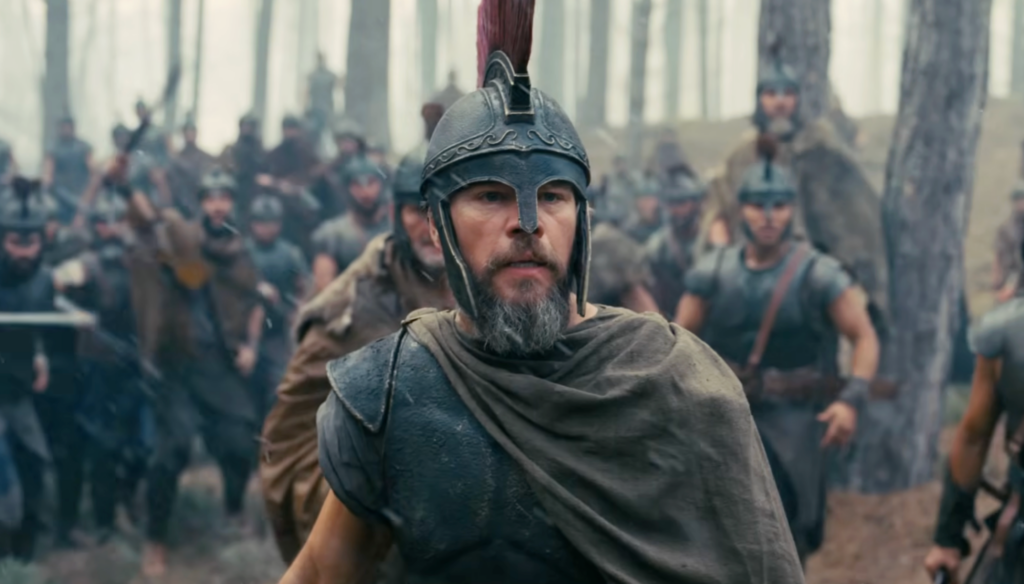
Ithaca’s King, Odysseus, has gone off to fight in the Trojan War. He tells his wife, Penelope, that if he doesn’t return, she should find another husband, a notion she refuses to entertain. The film begins twenty years after Odysseus has left. Penelope believes he is still alive and will return. His son, Telemachus, is coming of age and is poised to become king. However, the castle has been overrun with suitors vying for Penelope’s hand and seeking the throne for themselves, particularly the nobleman Antinous. The suitors are not thrown out due to Zeus’s law, “mutual respect between guests and hosts.”
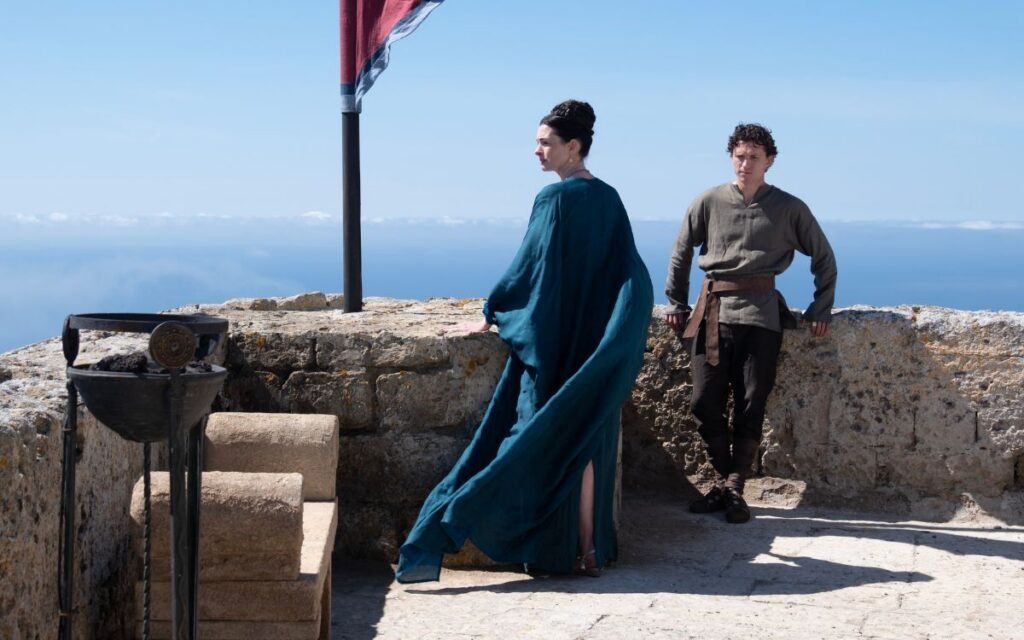
Telemachus leaves Ithaca, traveling with his teacher and bodyguard, Odysseus’s friend Mentor, to Menelaus, King of Sparta, to learn of his father’s whereabouts.
The film takes us through the many challenges and unwise yet necessary choices Odysseus makes to find his way back home. After the fall of Troy, he is instructed to return one way but chooses another. He is warned not to go in a certain direction, yet he does, encountering the Cyclops. Despite his men starving and dying, he disregards advice, confronting a witch who turns his men into pigs, a multi-headed monster that devours men, and rough seas. He ventures to Hades, faces the shades of his dead men, spends seven years on a deserted island, and has frequent conversations with Athena before finally making his way back to Penelope and his son.
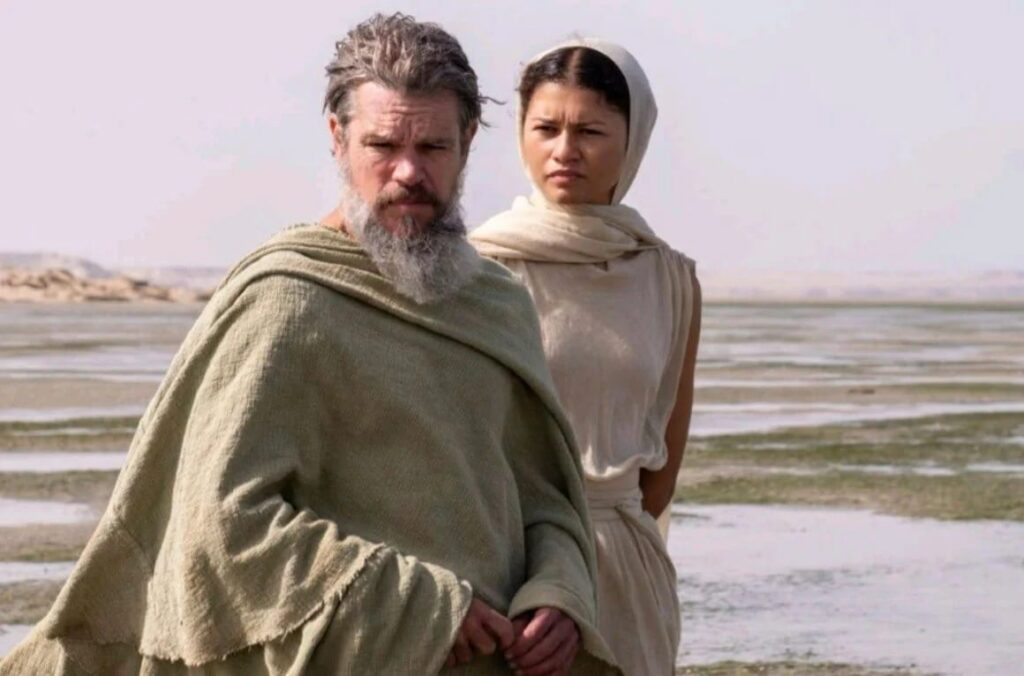
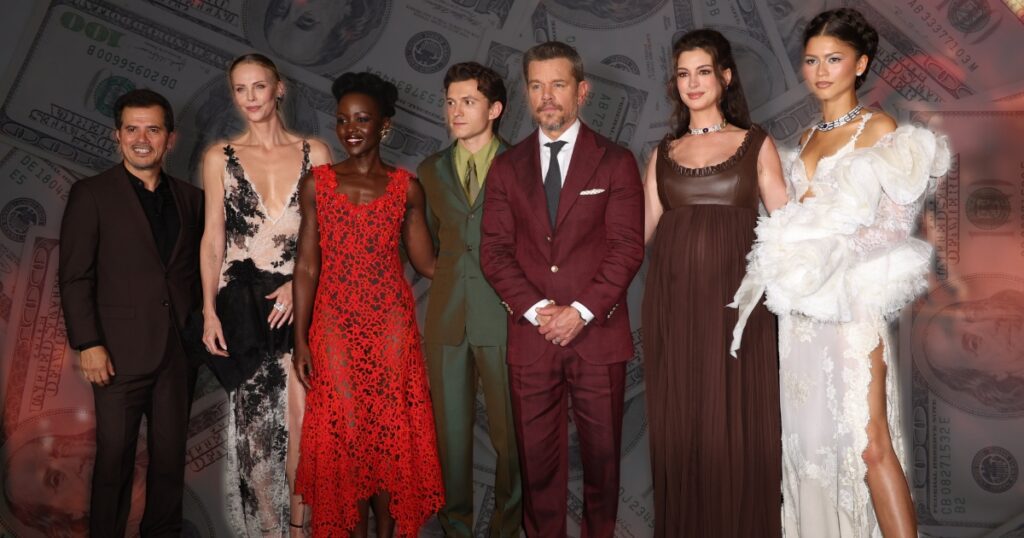
The cast in this film is phenomenal and is presented in such a way that they don’t overshadow the characters they portray. One might not consider Matt Damon as Odysseus, but he is the perfect choice, bringing strength, power, humanity, and compassion to the character. Anne Hathaway, another unexpected choice as the strong Queen Penelope, disappears into the character, proving her versatility as an actress. Tom Holland is perfect as Telemachus, the son who doesn’t remember his father but instinctively knows he’s alive and is willing to do whatever it takes to find him. Robert Pattinson, Lupita Nyong’o, Samantha Morton, Zendaya, and Charlize Theron are all fabulous in their roles, not because of their star quality, but because they embody their characters, making you forget the actors behind them.
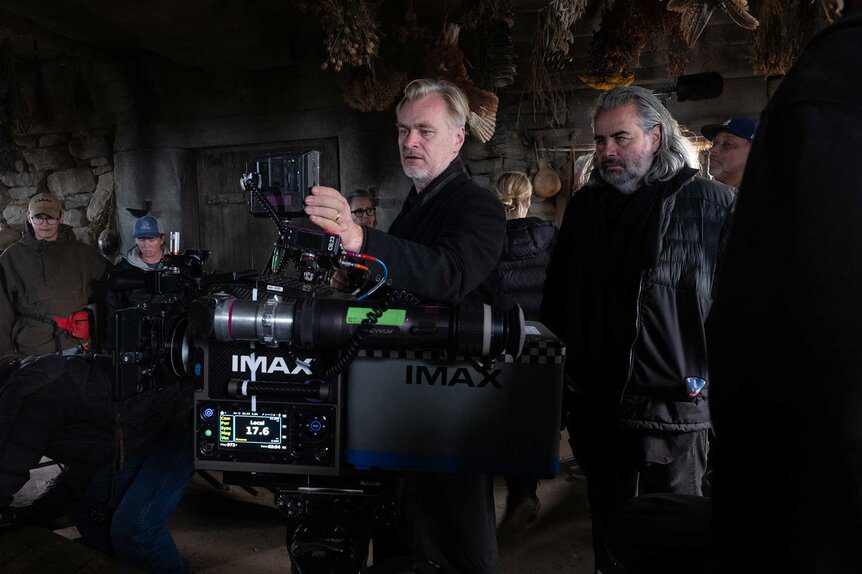
The film, written and directed by Christopher Nolan and produced with his wife Emma Thomas, was shot entirely on IMAX 70 mm film cameras. Being Christopher Nolan, the scenes were shot on location without blue screens. The scenes on the boat at sea, with men rowing, were shot over several months on the open sea, with men actually rowing through rough waters. The island scenes were filmed on location, and the scenes involving the Trojan horse were also filmed on location. The interpretation of the Trojan horse was particularly interesting, offering a fresh take on the classic depiction of the structure that led to Troy’s downfall.
The Odyssey surprised me with how much I enjoyed it, and I plan to see it again. I suggest watching it in an IMAX theater to fully experience the grandeur of this epic film.
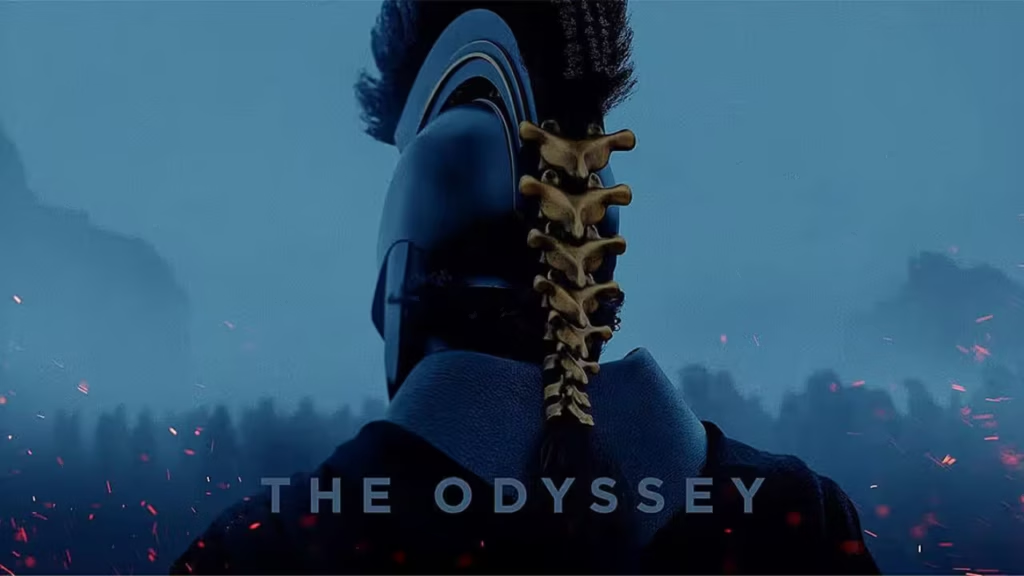
I give “The Odyssey” 4 ½ winks of the eye.
Until next time, keep your eye to the sky!